Home › 3D Printers › 3D printers, new, rated 4.5 stars and up
3D printers, new, rated 4.5 stars and up, by sales rank
Every listing we track on Amazon UK that matches all of these filters, by sales rank. Remove a filter with its "All" chip to widen the list.
Answer a few quick questions and we will recommend one from our reviews, at today’s prices.
35 listings tracked, 4 on offer right now.


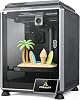





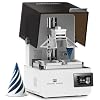


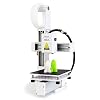





3D printers by brand
Guides
-
3D printing for beginners: start to finish
The whole path in one place: which printer to buy, what to order with it, which filament suits your first project, what to print first, what to watch for when buying, and the mistakes nearly everyone makes.
-
Auto bed levelling: what CR Touch and BLTouch do
What an auto bed levelling probe measures, what it cannot fix, and whether you still need to level the bed by hand first. Plus how flow and vibration calibration differ from it.
-
Bed-slinger vs CoreXY: what a printer’s motion system means for you
Why some printers throw the build plate back and forth while others lower it gently, what that does to speed, print quality and desk space, and which suits a first printer.
-
Enclosed vs open-frame 3D printers: do you need an enclosure?
An enclosure matters enormously for ABS and ASA and barely at all for PLA. What a printer box really does for warping, fumes, noise and safety, and when an open frame is the better choice.
Best-selling 3D Printers by year — which actually sold best, going back several years, ranked by sales position rather than opinion.
Why these are ordered by sales rank, not by a per-unit price
Every other section of this site ranks on a ratio, because filament and resin are commodities where cost per kilo or per litre is the honest comparison. Printers are not. There is no meaningful “per millimetre of build volume” number, and pretending otherwise would produce a confident-looking ranking that means nothing.
So this page starts with what actually sells: Amazon’s sales rank, best seller first. That shows which machines people are choosing, not which one suits you. The On offer now filter narrows it to printers with a live price drop, and where we show a percentage it is measured against the typical price over the last 90 days, a time-weighted median rather than an average. For the choice itself, see our printer reviews or the printer finder.
What actually matters when choosing
- FDM or resin. FDM (filament) for functional parts, larger objects and lower running costs. Resin for fine detail and miniatures, at the price of mess, fumes and consumables. Most people who buy resin first for “detail” end up wanting an FDM printer too.
- Automatic bed levelling. The single biggest quality-of-life feature. A printer without it is not unusable, but you will spend evenings on first layers instead of printing.
- Direct drive vs Bowden. Direct drive handles flexible filament far better and is generally more forgiving. Bowden setups can be faster and lighter.
- Build volume. Almost everyone overestimates what they need. A 220 × 220 mm bed covers the overwhelming majority of prints.
- Enclosure. Needed for ABS and ASA, useful for warping-prone materials, irrelevant for PLA and PETG. Can be added later.
The real cost of a cheap printer
A £150 printer and a £400 printer will both make parts. The difference is how much of your time goes into making them do it — levelling, tuning, failed prints, replacing parts that were cheap for a reason. If your time is worth anything, the mid-range machine is usually cheaper in the end.
Whichever you buy, budget for consumables from day one: filament, a spare nozzle or three, a decent build surface, and somewhere dry to keep the plastic. Those are in parts and accessories and covered in our guides.