PLA+ (PLA Plus) filament, ranked by £/kg
PLA+ — also sold as PLA Plus or PLA Pro — is a brand’s own toughened blend, with better impact resistance and layer adhesion than standard PLA. There is no agreed standard behind the plus, and it does not raise the heat limit.
| Product | Material | Weight | Rating | Price | Per kg | Deal |
|---|---|---|---|---|---|---|
 eSUN PLA+ 3D Printing Filament 1KG(2.2LBS), Enhanced Toughness, Yellow |
PLA+ | 1 kg | 4.4 out of 5 (8,197 Amazon ratings) | £10.33 | £10.33 | Warehouse · 10% under new |
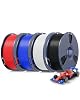 SUNLU 4KG Upgraded PLA Plus Filament Bundle, Black+White+Blue+Red |
PLA+ | 4 kg | 4.5 out of 5 (238 Amazon ratings) | £41.79 | £10.45 | — |
 OVERTURE 10KG Bundle High Speed PLA+ 2.0 3D Printer Filament, White*10 |
PLA+ | 10 kg | 4.7 out of 5 (25 Amazon ratings) | £104.49 | £10.45 | — |
 JAYO Silk Tri-Color PLA+ Filament 1.75mm 1.1KG, Blue+Green+Purple Gradient |
PLA+ | 1.1 kg | 4.6 out of 5 (250 Amazon ratings) | £11.55 | £10.50 | 15% below |
 eSUN PLA+ Filament 1.75mm, 10KG Enhanced Toughness PLA Plus |
PLA+ | 10 kg | 4.3 out of 5 (22 Amazon ratings) | £105.44 | £10.54 | 5% below |
 SUNLU 5KG PLA+ Filament Bundle, Enhanced Durability and High Strength |
PLA+ | 5 kg | 4.6 out of 5 (340 Amazon ratings) | £52.99 | £10.60 | — |
 DEEPLEE Rapid PLA Plus Filament 1.75mm Yellow 2kg |
PLA+ | 2 kg | 4.7 out of 5 (467 Amazon ratings) | £21.22 | £10.61 | 15% below |
 DEEPLEE Rapid PLA Plus Filament 1.75mm Beige 2kg |
PLA+ | 2 kg | 4.7 out of 5 (467 Amazon ratings) | £21.22 | £10.61 | 15% below |
 DEEPLEE Rapid PLA Plus Filament 1.75mm Blue 2kg |
PLA+ | 2 kg | 4.7 out of 5 (467 Amazon ratings) | £21.21 | £10.61 | — |
 ELEGOO PLA+ 3D Printer Filament 1.75mm White 2KG |
PLA+ | 2 kg | 4.6 out of 5 (984 Amazon ratings) | £21.22 | £10.61 | 15% below |
 DEEPLEE PLA Plus 1.75mm Filament Red/Blue 2kg Bundle |
PLA+ | 2 kg | 4.7 out of 5 (256 Amazon ratings) | £21.22 | £10.61 | 15% below |
 eSUN PLA+ 3D Printing Filament 2KG, Enhanced Toughness, Grey and Grey |
PLA+ | 2 kg | 4.5 out of 5 (1,332 Amazon ratings) | £21.24 | £10.62 | 15% below |
 ELEGOO PLA+ 3D Printer Filament 1.75mm White 2KG |
PLA+ | 2 kg | 4.6 out of 5 (406 Amazon ratings) | £21.23 | £10.62 | 15% below |
 ELEGOO PLA+ 3D Printer Filament 1.75mm Black 2KG |
PLA+ | 2 kg | 4.6 out of 5 (408 Amazon ratings) | £21.23 | £10.62 | 15% below |
 ELEGOO Rapid PLA Plus 3D Printer Filament 1.75mm Black/White 2KG, 600mm/s |
PLA+ | 2 kg | 4.5 out of 5 (2,851 Amazon ratings) | £21.23 | £10.62 | 15% below |
 ELEGOO Rapid PLA Plus 3D Printer Filament 1.75mm Black 2KG, Up to 600mm/s |
PLA+ | 2 kg | 4.3 out of 5 (118 Amazon ratings) | £21.23 | £10.62 | 15% below |
 ELEGOO Rapid PLA Plus 3D Printer Filament 1.75mm White 2KG, Up to 600mm/s |
PLA+ | 2 kg | 4.5 out of 5 (2,848 Amazon ratings) | £21.23 | £10.62 | 15% below |
 ELEGOO Rapid PLA Plus 3D Printer Filament 1.75mm Grey 2KG, Up to 600mm/s |
PLA+ | 2 kg | 4.5 out of 5 (2,851 Amazon ratings) | £21.23 | £10.62 | 15% below |
 ELEGOO PLA+ 3D Printer Filament 1.75mm Dark Blue/Red 2KG |
PLA+ | 2 kg | 4.4 out of 5 (35 Amazon ratings) | £21.23 | £10.62 | 15% below |
 DEEPLEE Rapid PLA Plus Filament 1.75mm Brown 2kg |
PLA+ | 2 kg | 4.7 out of 5 (467 Amazon ratings) | £21.23 | £10.62 | 15% below |
 DEEPLEE Rapid PLA Plus Filament 1.75mm Orange 2kg |
PLA+ | 2 kg | 4.7 out of 5 (467 Amazon ratings) | £21.23 | £10.62 | 15% below |
 DEEPLEE Rapid PLA Plus Filament 1.75mm Green 2kg |
PLA+ | 2 kg | 4.7 out of 5 (462 Amazon ratings) | £21.23 | £10.62 | 15% below |
 DEEPLEE Rapid PLA Plus Filament 1.75mm Red 2kg |
PLA+ | 2 kg | 4.7 out of 5 (467 Amazon ratings) | £21.23 | £10.62 | 15% below |
 ELEGOO PLA+ 3D Printer Filament 1.75mm Grey 2KG |
PLA+ | 2 kg | 4.6 out of 5 (994 Amazon ratings) | £21.23 | £10.62 | 15% below |
 ELEGOO PLA+ 3D Printer Filament 1.75mm Black & White 2KG |
PLA+ | 2 kg | 4.6 out of 5 (991 Amazon ratings) | £21.23 | £10.62 | 15% below |
 ELEGOO PLA+ 3D Printer Filament 1.75mm Purple & Pink 2KG |
PLA+ | 2 kg | 5.0 out of 5 (3 Amazon ratings) | £21.23 | £10.62 | 15% below |
 DEEPLEE PLA Plus 1.75mm Filament Red/Grass Green 2kg Bundle |
PLA+ | 2 kg | 4.7 out of 5 (33 Amazon ratings) | £21.23 | £10.62 | 15% below |
 DEEPLEE PLA Plus 1.75mm Filament Sunflower Yellow 2KG Bundle |
PLA+ | 2 kg | 4.7 out of 5 (35 Amazon ratings) | £21.23 | £10.62 | 15% below |
 DEEPLEE PLA Plus 1.75mm Filament Beige/Brown 2KG Bundle |
PLA+ | 2 kg | 4.7 out of 5 (35 Amazon ratings) | £21.24 | £10.62 | 15% below |
 OVERTURE 10KG Bundle PLA Plus (PLA+) 3D Printer Filament, Black*5+White*5 |
PLA+ | 10 kg | 5.0 out of 5 (7 Amazon ratings) | £107.53 | £10.75 | Like New · 2% under new |
 JAYO PLA+ 3D Printing Filament 1.75 mm, 1.1KG White |
PLA+ | 1.1 kg | 4.4 out of 5 (2,659 Amazon ratings) | £11.89 | £10.81 | 15% below |
 JAYO PLA+ 3D Printing Filament 1.75 mm, 1.1 kg Grey |
PLA+ | 1.1 kg | 4.4 out of 5 (2,648 Amazon ratings) | £11.89 | £10.81 | 15% below |
 JAYO PLA+ 3D Printer Filament 1.75mm, 1.1KG Red |
PLA+ | 1.1 kg | 4.4 out of 5 (2,670 Amazon ratings) | £11.89 | £10.81 | 15% below |
 CCTREE PLA+ 3D Printer Filament 1.75 mm, 1KG Cardboard Spool, White |
PLA+ | 1 kg | 4.0 out of 5 (34 Amazon ratings) | £10.82 | £10.82 | 5% below |
 CCTREE PLA+ 3D Printer Filament 1.75 mm, 1KG Cardboard Spool, Grey |
PLA+ | 1 kg | 4.0 out of 5 (34 Amazon ratings) | £10.82 | £10.82 | 5% below |
 CCTREE PLA+ 3D Printer Filament 1.75 mm, 1KG Cardboard Spool, Black |
PLA+ | 1 kg | 4.0 out of 5 (34 Amazon ratings) | £10.82 | £10.82 | 9% below |
 CCTREE PLA+ 3D Printer Filament 1.75 mm, 1KG Cardboard Spool, Blue |
PLA+ | 1 kg | 4.0 out of 5 (34 Amazon ratings) | £10.82 | £10.82 | 5% below |
 RepRapper 10X250g PLA Plus (PLA+) Upgraded Filament Bundle 1.75mm, Tougher & S |
PLA+ | 2.5 kg | 4.2 out of 5 (1,809 Amazon ratings) | £27.19 | £10.88 | 15% below |
 JAYO PLA+ 3D Printing Filament 1.75 mm, 1.1KG (2.4lbs) Spool Black |
PLA+ | 1.1 kg | 4.4 out of 5 (2,672 Amazon ratings) | £11.99 | £10.90 | — |
 SUNLU PLA+ 3D Printer Filament, Tougher PLA Plus Filament 1.75mm, 1KG White |
PLA+ | 1 kg | 4.6 out of 5 (2,477 Amazon ratings) | £10.90 | £10.90 | Like New · 27% under new |
 eSUN PLA+ 3D Printing Filament 4KG, Enhanced Toughness, Black |
PLA+ | 4 kg | 4.5 out of 5 (244 Amazon ratings) | £43.65 | £10.91 | Like New · 5% under new |
 OVERTURE 4KG Bundle Rapid Refill PLA+ 3D Printer Filament 1.75mm, 4 Colors |
PLA+ | 4 kg refill | 4.5 out of 5 (70 Amazon ratings) | £43.69 | £10.92 | 5% below |
 eSUN PLA+ Filament 1KG, PLA+HS High Speed 3D Printer Filament, Silver |
PLA+ | 1 kg | 4.6 out of 5 (122 Amazon ratings) | £10.99 | £10.99 | 35% below |
 eSUN PLA+ Filament 1KG, PLA+HS High Speed 3D Filament, Fire Engine Red |
PLA+ | 1 kg | 4.5 out of 5 (136 Amazon ratings) | £10.99 | £10.99 | 35% below |
 eSUN PLA+ Filament 1KG, PLA+HS High Speed 3D Printer Filament, Bone White |
PLA+ | 1 kg | 4.7 out of 5 (90 Amazon ratings) | £10.99 | £10.99 | 26% below |
 DEEPLEE PLA Plus 1.75mm Filament White 1kg |
PLA+ | 1 kg | 4.6 out of 5 (1,320 Amazon ratings) | £10.99 | £10.99 | — |
 DEEPLEE Rapid PLA Plus Filament 1.75mm Black 1kg |
PLA+ | 1 kg | 4.7 out of 5 (467 Amazon ratings) | £10.99 | £10.99 | — |
 JAYO Silk Dual Color PLA+ Filament 1.75mm, 1.1KG Red-Gold Gradient |
PLA+ | 1.1 kg | 4.6 out of 5 (250 Amazon ratings) | £12.10 | £11.00 | 15% below |
 DEEPLEE Rapid PLA Plus Filament 1.75mm Grey 4kg |
PLA+ | 4 kg | 4.7 out of 5 (467 Amazon ratings) | £43.99 | £11.00 | — |
 ELEGOO PLA+ 3D Printer Filament 1.75mm 4KG Black/White |
PLA+ | 4 kg | 5.0 out of 5 (6 Amazon ratings) | £43.99 | £11.00 | — |
 DEEPLEE PLA Plus 1.75mm Filament Red/Yellow/Dark Blue/Neon Green 4kg |
PLA+ | 4 kg | 4.6 out of 5 (1,300 Amazon ratings) | £43.99 | £11.00 | — |
 XTZL3D PLA+ 3D Printer Filament, PLA+ Co-Extruded Tri-Color (Red Gold Purple), |
PLA+ | 1 kg | 4.2 out of 5 (214 Amazon ratings) | £11.04 | £11.04 | 15% below |
 ELEGOO PLA+ 3D Printer Filament 1.75mm Transcluent 1KG |
PLA+ | 1 kg | 4.6 out of 5 (991 Amazon ratings) | £11.04 | £11.04 | 15% below |
 DEEPLEE Rapid PLA Plus Filament 1.75mm Beige/Orange 2KG Bundle |
PLA+ | 2 kg | 4.7 out of 5 (467 Amazon ratings) | £22.08 | £11.04 | 15% below |
 DEEPLEE Rapid PLA Plus Filament 1.75mm Beige/Brown 2KG Bundle |
PLA+ | 2 kg | 4.7 out of 5 (467 Amazon ratings) | £22.07 | £11.04 | 15% below |
 DEEPLEE Rapid PLA Plus Filament 1.75mm Red/Blue 2KG Bundle |
PLA+ | 2 kg | 4.7 out of 5 (467 Amazon ratings) | £22.09 | £11.05 | 15% below |
 ELEGOO PLA+ 3D Printer Filament 1.75mm Sky Blue 1KG |
PLA+ | 1 kg | 4.6 out of 5 (116 Amazon ratings) | £11.10 | £11.10 | Like New · 18% under new |
 SUNLU Silk Dual Color PLA Plus Filament, Shiny PLA+ Filament 1.75mm |
PLA+ | 1 kg | 4.6 out of 5 (964 Amazon ratings) | £11.12 | £11.12 | 30% below |
 SUNLU Premium PLA+ Filament 1.75mm, Enhanced Durability and High Strength |
PLA+ | 1 kg | 4.5 out of 5 (16,715 Amazon ratings) | £11.12 | £11.12 | 16% below |
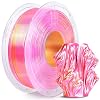 SUNLU Silk Dual Color PLA Plus Filament, Shiny PLA+ Filament 1.75mm |
PLA+ | 1 kg | 4.6 out of 5 (964 Amazon ratings) | £11.13 | £11.13 | 30% below |
Guides
-
Bed adhesion: what actually works
Glue sticks, hairspray, rafts, brims and expensive surfaces — an honest ranking of what fixes prints coming loose, starting with the free fix that solves most cases.
-
Do you need a filament dryer?
Wet filament is real and ruins prints, but a dedicated dryer is not the only answer. How to tell if moisture is your problem, and what to do about it.
-
Filament storage: dry boxes, vacuum bags and desiccant
Keeping filament dry is cheaper than drying it out. What actually works, what desiccant to use, and why the little sachet in the bag is already spent.
-
First layer calibration, properly
Nearly every adhesion problem and half of all print failures start in the first layer. How to set Z offset by eye, and what a good first layer actually looks like.
PLA+, PLA Plus, PLA Pro: what the plus means
PLA+ — sold interchangeably as PLA Plus, PLA Pro, PLA Tough, PLA Max and a dozen other suffixes — is a toughened version of the same base polymer, with additives that improve impact resistance and bonding between layers. The important thing to understand about the name is that there is no standard behind it. Each manufacturer mixes its own recipe and calls the result PLA+, and nobody is obliged to publish what is in it or what it changes.
What the plus reliably buys you across brands is better impact resistance and noticeably stronger layer adhesion, so parts fail by bending or crushing rather than splitting cleanly along a layer line. That matters more than raw tensile numbers: layer adhesion is usually what decides whether a printed bracket survives being dropped.
What the plus does not mean
It is not a heat upgrade. PLA+ softens at much the same temperature as standard PLA, somewhere around 55 °C, so it is still the wrong material for a car interior, a sunny windowsill or anything near a heat source. If heat is the problem, PETG or ASA is the answer and no grade of PLA will be.
Nor is it a different material to print. It needs no enclosure, no hardened nozzle and no change of build surface. Anyone comfortable with plain PLA filament can run PLA+ on the same printer the same afternoon.
When the premium is worth paying
For parts with a job to do — brackets, mounts, handles, tool holders, anything that gets picked up and dropped — usually yes. The gap over standard PLA tends to be modest, and toughness is exactly the property those parts need.
For display models, figures, draft prints and prototypes, the extra buys you nothing you will see. A sensible habit is cheap standard PLA for everything visual and PLA+ for everything functional. Compare today’s figures above against the ranking on the plain PLA page — when the gap is small, there is little reason not to default to the toughened version.
Settings to start from
Usually 5–15 °C hotter than the same brand’s standard PLA — commonly 210–230 °C, bed 55–65 °C, standard brass nozzle, open frame. The additives that improve toughness generally need a little more heat to flow properly, and running PLA+ at PLA temperatures is a common cause of poor layer bonding in a material bought specifically for good layer bonding.
Cooling can usually stay high, though backing the fan off slightly helps strength. The manufacturer’s own printed range beats anything here, and with PLA+ that matters more than usual, because the range reflects a recipe only they know.
Buying notes
Because the formulation is proprietary, results vary more between brands than they do with standard PLA, and the same spool colour from the same brand can behave differently between production batches. If a particular PLA+ works well for you, there is a real argument for staying with it rather than chasing the cheapest per-kilo figure in any given week.
Treat “PLA+” on a listing as a claim rather than a specification. A brand that states a Charpy or Izod impact figure, or at least says what the additive is for, is telling you more than one that only puts a plus on the label.
How to read this table
The per-kilo column is the only number that compares listings honestly. A spool sold at 40% off can still be poor value, and a multi-spool bundle looks expensive until you divide by its total weight. We count bundles at their full weight, so a 4 × 1 kg pack and a single 1 kg spool sit on the same scale.
Where a listing does not state a usable weight we leave the per-kilo figure blank rather than guessing — a wrong ranking is worse than a missing one.