PETG filament, ranked by £/kg
PETG trades a little print ease for real toughness and temperature resistance. It is the sensible step up from PLA for functional parts, and it does not need an enclosure.
| Product | Material | Weight | Rating | Price | Per kg | Deal |
|---|---|---|---|---|---|---|
 JAYO Clear PETG 3D Printing Filament 1.75 mm, 1.1KG Transparent |
PETG | 1.1 kg | 4.3 out of 5 (1,976 Amazon ratings) | £11.99 | £10.90 | — |
 JAYO PETG 3D Printer Filament 1.75mm, 1.1KG Light Pink |
PETG | 1.1 kg | 4.3 out of 5 (1,976 Amazon ratings) | £11.99 | £10.90 | — |
 JAYO PETG 3D Printer Filament 1.75 mm, 1.1KG Bright Pink |
PETG | 1.1 kg | 4.3 out of 5 (1,982 Amazon ratings) | £11.99 | £10.90 | — |
 NextShapes PETG Filament 1.75mm, 1kg Spool, petg White |
PETG | 1 kg | 4.6 out of 5 (85 Amazon ratings) | £10.91 | £10.91 | 8% below |
 Amazon Basics PETG 3D Printer Filament, 1.75 mm, Gray, 1 kg Spool |
PETG | 1 kg | 4.0 out of 5 (698 Amazon ratings) | £10.92 | £10.92 | Warehouse · 8% under new |
 GratKit PETG Filament 1.75mm 1KG, High Toughness, PETG Transparent |
PETG | 1 kg | 4.6 out of 5 (279 Amazon ratings) | £10.98 | £10.98 | 21% below |
 eSUN PETG Filament 1KG, PETG+HS High Speed 3D Printer Filament, Solid White |
PETG | 1 kg | 4.5 out of 5 (1,324 Amazon ratings) | £10.99 | £10.99 | 28% below |
 DEEPLEE PETG Filament Black 1KG, 3D Printer Filament Good Impact Resistance, F |
PETG | 1 kg | 3.9 out of 5 (207 Amazon ratings) | £10.99 | £10.99 | — |
 kexcelled Rapid PETG HS 3D Printer Filament, 1kg 1,75mm +/- 0,03mm, Blue |
PETG | 1 kg | 4.2 out of 5 (302 Amazon ratings) | £10.99 | £10.99 | 31% below |
 Creality PETG Filament Refill 3D Printer Filament 1kg 1.75 mm(2.2lb) Refilamen |
PETG | 1 kg refill | 4.0 out of 5 (89 Amazon ratings) | £10.99 | £10.99 | — |
 IEMAI PETG Filament 1.75mm 1KG, Red PETG 3D Printer Filament, Compatible with |
PETG | 1 kg | 4.4 out of 5 (271 Amazon ratings) | £10.99 | £10.99 | 15% below |
 OVERTURE 2KG Bundle Rapid PETG 3D Printer Filament 1.75mm, Light Grey*2 |
PETG | 2 kg | 4.2 out of 5 (700 Amazon ratings) | £21.99 | £11.00 | — |
 SUNLU 2KG PETG Filament 1.75mm, High Toughness 3D Printer Filament |
PETG | 2 kg | 4.6 out of 5 (37 Amazon ratings) | £21.99 | £11.00 | — |
 ELEGOO Rapid PETG 3D Printer Filament Bundle 1.75mm Blue/Red 2KG |
PETG | 2 kg | 4.4 out of 5 (4,663 Amazon ratings) | £22.08 | £11.04 | 15% below |
 ELEGOO Rapid PETG 3D Printer Filament Bundle 1.75mm Yellow/Green 2KG |
PETG | 2 kg | 4.5 out of 5 (4,752 Amazon ratings) | £22.08 | £11.04 | 15% below |
 ELEGOO Rapid PETG 3D Printer Filament Bundle 1.75mm Yellow/Orange 2KG |
PETG | 2 kg | 4.4 out of 5 (4,663 Amazon ratings) | £22.08 | £11.04 | 15% below |
 Rapid PETG Filament 1.75mm Blue Rose-Red 1KG, High Speed Up to 600mm/s 3D Prin |
PETG | 1 kg | 4.0 out of 5 (1,339 Amazon ratings) | £11.04 | £11.04 | 15% below |
 High-Speed Bi-Colour Blue&Green Silk PETG 3D Printer Filament 1.75mm, Dimentio |
PETG | 1 kg | 4.0 out of 5 (1,338 Amazon ratings) | £11.04 | £11.04 | 15% below |
 ELEGOO Rapid PETG 3D Printer Filament Bundle 1.75mm Beige/Brown 2KG |
PETG | 2 kg | 4.5 out of 5 (4,745 Amazon ratings) | £22.08 | £11.04 | 15% below |
 eSUN PETG Matte Filament 1KG, Shine-Free Color, Frosted Texture, White |
PETG | 1 kg | 4.2 out of 5 (104 Amazon ratings) | £11.14 | £11.14 | — |
 YOOPAI PETG Filament 1.75mm, 3D Printer Filament 4KG(8.8lbs), 3D Printing Fila |
PETG | 4 kg | 4.6 out of 5 (3,701 Amazon ratings) | £44.63 | £11.16 | — |
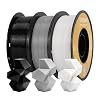 Kingroon High Speed PETG 3D Printer Filament 1.75mm, 3D Printer Rapid Filament |
PETG | 3 kg | 4.4 out of 5 (230 Amazon ratings) | £33.63 | £11.21 | 61% below |
 eSUN PETG+ Filament 2KG, High Toughness and Heat Resistance, Black + Grey |
PETG | 2 kg | 3.0 out of 5 (2 Amazon ratings) | £22.55 | £11.28 | 9% below |
 eSUN PETG+ Filament 2KG, High Toughness and Heat Resistance, White + Grey |
PETG | 2 kg | 3.0 out of 5 (2 Amazon ratings) | £22.55 | £11.28 | 9% below |
 eSUN PETG+ Filament 2KG, High Toughness and Heat Resistance, Black + White |
PETG | 2 kg | 3.0 out of 5 (2 Amazon ratings) | £22.55 | £11.28 | 9% below |
 Kingroon High Speed PETG 3D Printer Filament 1.75mm, 3D Printer Rapid Filament |
PETG | 3 kg | 4.4 out of 5 (230 Amazon ratings) | £33.93 | £11.31 | 43% below |
 ERYONE High Speed PETG Filament 1.75mm +/- 0.03mm, 3D Printing Filament, 30-60 |
PETG | 1 kg | 4.6 out of 5 (267 Amazon ratings) | £11.39 | £11.39 | 21% below |
 ANYCUBIC PETG 3D Filament 1.75mm, 2KG Translucent Brown+Translucent Olive |
PETG | 2 kg | 4.9 out of 5 (13 Amazon ratings) | £22.96 | £11.48 | 11% below |
 ELEGOO PETG HF 3D Printer Filament 1.75mm Black 1KG |
PETG | 1 kg | 4.8 out of 5 (64 Amazon ratings) | £11.49 | £11.49 | — |
 eSUN PETG 3D Printing Filament 1.75mm, 1KG Spool(2.2 LBS), Natural |
PETG | 1 kg | 4.4 out of 5 (6,106 Amazon ratings) | £11.53 | £11.53 | Like New · 4% under new |
 Amazon Basics PETG Filament 1.75mm 3D Printer, Black, 1 kg Spool |
PETG | 1 kg | 4.2 out of 5 (1,911 Amazon ratings) | £11.59 | £11.59 | — |
 Creality PETG Filament 1.75mm, 3D Printer Filament 1KG(2.2lbs), High Precision |
PETG | 1 kg | 4.6 out of 5 (3,701 Amazon ratings) | £11.59 | £11.59 | 22% below |
 ANYCUBIC PETG Filament 1.75mm, 4KG Black+Texture Silver+Forest Green+Yellow |
PETG | 4 kg | 4.6 out of 5 (73 Amazon ratings) | £46.52 | £11.63 | Warehouse · 1% under new |
 IEMAI PETG Filament 1.75mm 1Kg, Transparent Red PETG 3D Printer Filament, High |
PETG | 1 kg | 4.4 out of 5 (233 Amazon ratings) | £11.69 | £11.69 | 10% below |
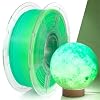 IEMAI PETG Filament 1.75mm 1Kg, Gradient Green Yellow Translucent PETG, High S |
PETG | 1 kg | 4.4 out of 5 (863 Amazon ratings) | £11.69 | £11.69 | 10% below |
 IEMAI PETG Filament 1.75mm 1Kg, Transparent Yellow PETG 3D Printer Filament, H |
PETG | 1 kg | 4.4 out of 5 (863 Amazon ratings) | £11.69 | £11.69 | 10% below |
 IEMAI PETG Filament 1.75mm 1Kg, Gradient Orange White Translucent PETG, High S |
PETG | 1 kg | 4.4 out of 5 (863 Amazon ratings) | £11.69 | £11.69 | 10% below |
 IEMAI PETG Filament 1.75mm 1Kg, Transparent Smoke Gray 3D Printer Filament, Hi |
PETG | 1 kg | 4.4 out of 5 (863 Amazon ratings) | £11.69 | £11.69 | 10% below |
 IEMAI PETG Filament 1.75mm 1Kg, Luminous Orange PETG 3D Printer Filament, Glow |
PETG | 1 kg | 4.4 out of 5 (863 Amazon ratings) | £11.69 | £11.69 | 10% below |
 TINMORRY Rapid PETG Filament 1.75 mm for 3D Printers, 4 x 1 kg, 4 Colours |
PETG | 4 kg | 4.8 out of 5 (36 Amazon ratings) | £46.74 | £11.69 | 27% below |
 YOOPAI PETG Filament 1.75mm, 3D Printer Filament 1KG(2.2lbs), High Precision, |
PETG | 1 kg | 4.6 out of 5 (3,701 Amazon ratings) | £11.72 | £11.72 | 21% below |
 Conjure PETG Filament 1.75mm 1KG 3D Printer Filament,Dark Blue |
PETG | 1 kg | 4.1 out of 5 (7 Amazon ratings) | £11.72 | £11.72 | 9% below |
 Conjure PETG Filament 1.75mm 1KG 3D Printer Filament,Grey |
PETG | 1 kg | 4.1 out of 5 (7 Amazon ratings) | £11.72 | £11.72 | — |
 Conjure PETG Filament 1.75mm 1KG 3D Printer Filament,Yellow |
PETG | 1 kg | 4.8 out of 5 (6 Amazon ratings) | £11.72 | £11.72 | 9% below |
 Conjure PETG Filament 1.75mm 1KG 3D Printer Filament, Black |
PETG | 1 kg | 4.1 out of 5 (7 Amazon ratings) | £11.72 | £11.72 | — |
| Conjure PETG Filament 1.75mm 1KG 3D Printer Filament,Red | PETG | 1 kg | — | £11.72 | £11.72 | — |
 Conjure PETG Filament 1.75mm 1KG 3D Printer Filament,Green |
PETG | 1 kg | 4.8 out of 5 (6 Amazon ratings) | £11.72 | £11.72 | — |
 Conjure PETG Filament 1.75mm 1KG 3D Printer Filament,Skin |
PETG | 1 kg | 4.8 out of 5 (6 Amazon ratings) | £11.72 | £11.72 | — |
 Conjure PETG Filament 1.75mm 1KG 3D Printer Filament,White |
PETG | 1 kg | 4.1 out of 5 (7 Amazon ratings) | £11.72 | £11.72 | — |
 ANYCUBIC PETG 3D Printer Filament 1.75mm, 4KG Pink+Purple+Blue+Green |
PETG | 4 kg | 4.5 out of 5 (71 Amazon ratings) | £46.99 | £11.75 | — |
 Official Creality PETG 3D Printer Filament 1.75mm 1KG (2.2lbs), Translucent Du |
PETG | 1 kg | 4.1 out of 5 (57 Amazon ratings) | £11.83 | £11.83 | 70% below |
 DEEPLEE Rapid PETG Filament 1.75mm Orange 1KG |
PETG | 1 kg | 4.4 out of 5 (264 Amazon ratings) | £11.87 | £11.87 | 15% below |
 DEEPLEE Rapid PETG Filament 1.75mm Transparent 1KG |
PETG | 1 kg | 4.4 out of 5 (263 Amazon ratings) | £11.87 | £11.87 | 15% below |
 DEEPLEE Rapid PETG Filament 1.75mm Yellow 1KG |
PETG | 1 kg | 4.4 out of 5 (263 Amazon ratings) | £11.88 | £11.88 | 15% below |
 DEEPLEE Rapid PETG Filament 1.75mm Green 1KG |
PETG | 1 kg | 4.4 out of 5 (263 Amazon ratings) | £11.88 | £11.88 | 15% below |
 ANYCUBIC PETG 3D Printer Filament 1.75mm, 1KG Texture Grey |
PETG | 1 kg | 4.5 out of 5 (1,884 Amazon ratings) | £11.89 | £11.89 | 15% below |
 GratKit PETG Filament 1.75mm 1KG, High Toughness, PETG Transparent Yellow |
PETG | 1 kg | 4.6 out of 5 (279 Amazon ratings) | £11.89 | £11.89 | 15% below |
 GratKit PETG Filament 1.75mm 1KG, High Toughness, PETG Green |
PETG | 1 kg | 4.6 out of 5 (279 Amazon ratings) | £11.89 | £11.89 | 15% below |
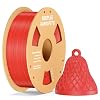 DEEPLEE Rapid PETG Filament 1.75mm Red 1KG |
PETG | 1 kg | 4.4 out of 5 (264 Amazon ratings) | £11.89 | £11.89 | — |
 DEEPLEE Rapid PETG Filament 1.75mm Blue 1KG |
PETG | 1 kg | 4.4 out of 5 (263 Amazon ratings) | £11.89 | £11.89 | 15% below |
Guides
-
Bed adhesion: what actually works
Glue sticks, hairspray, rafts, brims and expensive surfaces — an honest ranking of what fixes prints coming loose, starting with the free fix that solves most cases.
-
Do you need a filament dryer?
Wet filament is real and ruins prints, but a dedicated dryer is not the only answer. How to tell if moisture is your problem, and what to do about it.
-
Filament storage: dry boxes, vacuum bags and desiccant
Keeping filament dry is cheaper than drying it out. What actually works, what desiccant to use, and why the little sachet in the bag is already spent.
-
First layer calibration, properly
Nearly every adhesion problem and half of all print failures start in the first layer. How to set Z offset by eye, and what a good first layer actually looks like.
The sensible step up from PLA
PETG is tougher than PLA, holds up to around 75 °C, resists UV and moisture reasonably well outdoors, and — most usefully — bends before it breaks. For brackets, clips, enclosures, outdoor fittings and anything that gets handled, it is the obvious choice, and it does all this without needing an enclosure.
It is also chemically resistant and food-safe in the raw material sense, though a printed part’s layer lines harbour bacteria regardless of the polymer, so treat “food-safe filament” claims with care.
What it costs you
PETG is stringier than PLA, and the fix is fighting retraction and temperature rather than eliminating it entirely — expect some wisping and plan to clean up. Overhangs and bridges are less crisp. It absorbs moisture noticeably faster than PLA, which shows up as popping and rough surfaces within weeks in a damp room.
And it sticks to smooth PEI too well. This is not a minor point: PETG can bond hard enough to tear the coating off a build sheet. Use a glue stick as a release layer, or print on a textured plate — see build surfaces compared.
Settings to start from
Nozzle 230–250 °C, bed 70–80 °C, and reduce cooling to roughly 30–50%. This last point is the one people get wrong: PETG cooled aggressively looks tidier but bonds badly, which throws away the toughness you bought the material for.
If you are getting stringing, drop the nozzle temperature in 5 °C steps before increasing retraction, and check the filament is dry.
A standard brass nozzle is fine, and an enclosure is not needed — though if you have one, a closed door does no harm and slightly improves layer bonding on tall parts. Only the carbon-filled grades need hardened steel; see PETG-CF and hardened versus brass nozzles.
When PETG is the wrong choice
- Fine detail and crisp overhangs. Plain PLA prints sharper and cleaner, and for a display model there is no reason to use anything else. PLA versus PETG covers the trade properly.
- Above about 75 °C. Step up to ASA or ABS, accepting the enclosure and ventilation that come with them.
- Long-term sunlight. PETG copes with weather better than PLA but ASA is the material actually formulated for UV.
- Parts that must squash or grip. PETG bends; it does not stretch. That is TPU.
- Sliding or geared parts under load. Nylon is the wear-resistant, self-lubricating option.
Buying notes
PETG is generally a little more expensive per kilo than PLA, though the gap is often smaller than people assume — the ranking on this page is the place to check on any given day. Keep it dry: see filament storage.
How to read this table
The per-kilo column is the only number that compares listings honestly. A spool sold at 40% off can still be poor value, and a multi-spool bundle looks expensive until you divide by its total weight. We count bundles at their full weight, so a 4 × 1 kg pack and a single 1 kg spool sit on the same scale.
Where a listing does not state a usable weight we leave the per-kilo figure blank rather than guessing — a wrong ranking is worse than a missing one.